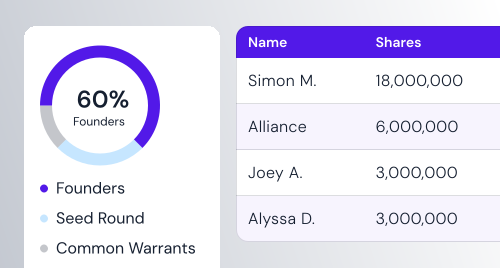
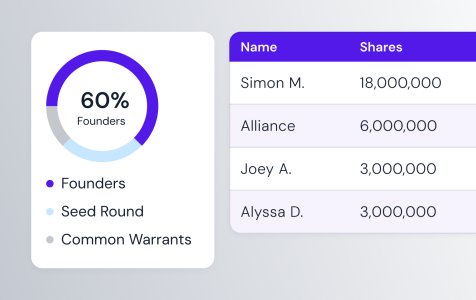
As your startup matures, founders, early employees, or angel investors may look for liquidity by selling their existing shares to new investors without waiting for an IPO. Unlike primary sales, secondary transfers do not result in new capital for the company. Instead, they represent a change in ownership of existing equity. Handling these effectively is critical for maintaining an accurate cap table and ensuring compliance.
In this guide, we’ll walk you through what secondary share transfers are, when they occur, and how to manage them effectively.

What Is A Secondary Share Transfer?
A secondary share transfer occurs when an existing shareholder sells or transfers their shares to another shareholder. Unlike primary issuances or funding rounds, where the company issues new shares to raise capital, secondary share transfers do not increase the company’s total outstanding shares. The ownership is only transferred from one holder to another.
When Does A Secondary Share Transfer Take Place?
The reasons for secondary share transfers can be categorized by the stakeholders (founders and employees), investors, or the company itself.
| Reason | Who Initiates It | Why It Happens | Impact on Company |
|---|---|---|---|
| Early Investor Exit | Angel investors / Seed investors | Investors want liquidity before IPO or acquisition | No dilution. Ownership shifts to a new investor |
| Employee Liquidity | Employees with vested shares | Employees want to monetize equity for personal financial planning | Requires company approval and cap table update |
| Founder Partial Exit | Founders | Founders diversify personal wealth or step back from an active role | May raise governance considerations |
| Pre-IPO Secondary Sales | Existing shareholders | Investors seek liquidity before a public listing | Often structured and regulated |
| Acquisition of Shares by Strategic Investor | External investor | A strategic buyer wants a minority stake in the company. | No new shares issued |
| Estate Planning / Inheritance | Shareholder or heirs | Shares transferred due to death, gifting, or estate restructuring | Legal documentation required |
| Internal Restructuring | Shareholders / Founders | Ownership realignment among co-founders or holding entities | Administrative update to cap table |
| Buyback by Existing Shareholder | Existing investor | Increase ownership percentage | No dilution |
| Regulatory or Compliance Requirements | Company | Ownership restructuring to meet jurisdictional laws | Ensures compliance |
Steps For Managing Secondary Share Transfer
Here are a few key steps to manage secondary share transfer:

1. Understand The Legal Framework
Before any transfer occurs, you must review your company’s documents, such as the Articles of Association or any shareholder agreement.
- Restrictions: Most private companies have restrictions on who can buy shares and under what conditions.
- Right of First Refusal (ROFR): This common clause requires the selling shareholder to offer their shares to the company or other existing shareholders before selling to an outside party.
- Board Approval: Typically, the board of directors must formally approve any transfer of shares to ensure it aligns with corporate policy.
2. Prepare The Necessary Documentation
A compliant transfer requires several key documents to be executed and filed:
- Stock Purchase Agreement (SPA): The legal contract between the buyer and seller detailing the price and number of shares.
- Share Transfer Form: A document signed by both parties to formally request the transfer.
- Cancelled & New Certificates: The company must cancel the old share certificates and issue new ones to the buyer.
- Board Resolution: Documentation of the board’s official approval of the transaction.
3. Execute and record Share Transfers
Handling manual transfers is time-consuming and prone to errors. Using a cap table management platform like Eqvista can simplify secondary transactions by:
- Automating Transfers: You can perform partial or transfer all shares directly on the platform, which automatically updates your cap table.
- Real-Time Tracking: View a summary of all secondary transactions—including exercises, repurchases, and cancellations—in one secure dashboard.
- Compliance Support: Access built-in tools for 409A valuations and financial reporting to ensure every transfer meets regulatory standards.
Recording Share Transfers On Eqvista
You can transfer your shares using Eqvista and record all the details directly on the platform. This keeps everything organized in one place and makes it easy to share information with others without sending multiple emails back and forth.
Once you have the details for the shares transfer, follow these steps in the app.
On the Equities page, choose which shares you would like to transfer.
Once you have clicked into the Equity Grant, go to the Actions bar and click on “Transfer shares”, which will redirect you to the following page.

You can choose either partial transfer or transfer all shares, along with the equity class of which this new grant would be a part. The price per share, transfer date, and transfer grant name will be automatically filled.
After the transfer is complete, you can see the transferred shares on the app in the equity class.
Make sure to also record the transfer in the secondary transaction section. Here you can view the details about the transfer under the “transfer” tab in the Secondary Transaction.
That’s it! You can quickly transfer company shares and securely store all the records on the Eqvista app.
FAQs On Share Transfers
This section offers answers to common questions about share transfers.
1. Does a share transfer dilute existing shareholders?
No. Since no new shares are issued, ownership percentages only change between the transferer and transferee.
2. Can stakeholders transfer shares anytime?
Stakeholders may not be able to transfer shares at any time. Transfers could be subject to vesting schedules, lock-up periods, or require approval from the company.
3. How are share transfers recorded?
Share transfers must be in the secondary transaction section and reflected accurately in the company’s cap table.
4. Does Eqvista offer tutorials for transferring shares?
Yes, Eqvista provides support articles and assistance to help you transfer your shares. If you need additional help, you can contact us, and we will help you.
Streamline Secondary Share Transfers With Eqvista
Share transfers are an essential part of equity management and must be handled with precision. Proper documentation, compliance checks, and cap table updates are important to manage share transfers.
Eqvista offers a highly customizable equity management solution designed to assist companies in equity and compliance operations. In terms of pricing, Eqvista provides a free tier, whereas other platforms typically operate on paid plans.
Ready to manage your equity with confidence? Sign up with Eqvista today and simplify your secondary share transfer process.