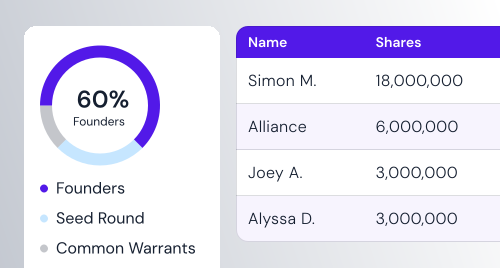
Eqvista has launched Company-Sponsored Tender Offers, giving private companies a new way to organize shareholder liquidity events directly within their equity management platform.
As companies stay private longer, employees and early investors often wait years for an opportunity to sell their shares. Eqvista’s new capabilities help companies organize these transactions while maintaining control over participation, approvals, allocation rules, and ownership changes.
The launch also marks a step toward Eqvista’s planned secondary marketplace capabilities, bringing equity management, valuation, and private market liquidity closer together.
What Is a Company-Sponsored Tender Offer?
A company-sponsored tender offer is a time-limited event where eligible shareholders can sell shares on set terms. The buyer might be the company, existing investors, or an outside party. Because the company runs it, the company decides who can take part, how long the offer stays open, and how much can be sold.
For example, a company offers to purchase up to 20,000 shares at $5 per share over a 30-day period. Each eligible employee can sell up to 1,000 shares. If shareholders offer more than 20,000 shares in total, the company can allocate purchases proportionally to stay within the offer limit.
Unlike informal secondary share sales, company-sponsored tender offers provide a coordinated process that accounts for shareholder rights, transfer restrictions, and required approvals.
Why Shareholders at Private Companies Need Liquidity Options
Without a program like this, equity can sit untouched until an IPO or acquisition, which may be years away. A tender offer lets eligible employees and early investors sell some of their shares sooner. How much it helps depends on the offer’s size, terms, funding, and eligibility rules, and it won’t suit every shareholder.
With Eqvista, private companies can help their employees and early investors turn their shares into cash, rewarding them for their contributions to the company. We already help companies manage ownership and understand their value. Bringing tender offers into the same platform is a natural next step toward connecting equity management, valuation, and liquidity.

Tomas Milar
Founder & CEO
Eqvista’s tools let the company manage participation and transaction details in one place instead of juggling them by hand.
How Eqvista’s Company-Sponsored Tender Offers Work
Eqvista brings the key steps of a company-sponsored tender offer into one workflow, connecting participant eligibility, transaction rules, approvals, and ownership updates directly with cap table management.

The platform provides five key capabilities:
1. Control participation
Define eligible buyers and sellers, set offer windows, and determine who can participate. Companies can limit offers to specific groups, such as current employees, former employees, or existing investors, rather than opening participation to their entire shareholder base.
2. Manage transaction limits and allocations
Set limits on how many shares can be sold and establish allocation rules, including pro rata distributions and participant priorities. These controls help companies manage oversubscribed offers while keeping transactions within predefined limits.
3. Handle approvals and shareholder rights
Coordinate required approvals and manage rights of first refusal (ROFR) within the tender offer workflow. This helps legal and finance teams address transfer restrictions and shareholder rights without managing each step through disconnected processes.
4. Keep ownership records accurate
Completed transactions are reflected directly in Eqvista’s cap table management platform, keeping shareholder records aligned with the final transaction outcomes. This reduces the need for manual reconciliation across separate systems.
5. Support pricing decisions with real-time valuation data
Reference Eqvista Real-Time Company Valuation® data when evaluating tender offer pricing. Continuously updated valuation estimates provide additional market context to help companies assess potential transaction prices alongside other relevant factors.
How Real-Time Valuation Supports Tender Offer Pricing
Determining an appropriate price for private company shares can be challenging. Unlike publicly traded companies, private businesses don’t have continuously available market prices, often relying on previous funding rounds, periodic valuations, and limited transaction data.
Eqvista connects company-sponsored tender offers with Eqvista Real-Time Company Valuation®, providing access to continuously updated valuation estimates covering approximately 65,000 U.S. private companies with a combined estimated value of $9 trillion.
By incorporating company data, market conditions, and comparable company valuations, Eqvista Real-Time Company Valuation® gives founders and finance teams an additional data-driven reference when evaluating tender offer pricing. This helps companies assess potential transaction prices with more current market context rather than relying solely on historical valuations.
Company-level valuation estimates do not automatically determine the price of individual shares, which can also depend on share-class rights, transaction terms, and other factors. However, connecting real-time valuation data with equity management gives companies additional context for making informed liquidity decisions.
Who Should Consider a Company-Sponsored Tender Offer?
Company-sponsored tender offers can be particularly useful for growing private companies that want to provide shareholder liquidity while maintaining control over ownership changes.
A tender offer may be worth considering if:
- Your company has reached a stage where providing shareholder liquidity is becoming a priority, even without an upcoming IPO or acquisition.
- Employees and early investors have held shares for several years and may be looking for opportunities to realize some of their value.
- You want greater oversight of secondary share transactions, including who can participate and how shares are transferred.
- Your board is considering a structured liquidity program rather than managing individual share sales separately.
Tender offers may be less suitable for companies with limited shareholder demand, uncertain valuations, or an upcoming liquidity event such as an acquisition. The right approach depends on the company’s ownership structure, financial position, and shareholder needs.

Building Toward a Secondary Marketplace
Company-sponsored tender offers are the first step in Eqvista’s broader plans to expand private market liquidity capabilities.
Building on its equity management, valuation, and tender offer infrastructure, Eqvista plans to develop secondary marketplace capabilities that support structured, company-approved private share transactions.
The goal is to connect ownership records, real-time valuation data, and liquidity opportunities within one platform, making private share transactions easier to manage while allowing companies to maintain control over participation and ownership changes.
Additional details on future capabilities and availability will be announced separately, subject to applicable regulatory requirements.
Regulatory Considerations for Company-Sponsored Tender Offers
Company-sponsored tender offers may be subject to U.S. federal securities laws, including Exchange Act Rule 13e-4 and Rule 14e-1, depending on the transaction structure, issuer, and parties involved. State securities laws, shareholder agreements, transfer restrictions, and other legal requirements may also apply.
Before launching a tender offer, companies should consult qualified securities counsel to determine which regulations apply, what disclosures and procedures are required, and how the transaction should be structured. Tax advisers can also help evaluate the potential tax implications for the company and participating shareholders.
Frequently Asked Questions About Company-Sponsored Tender Offers
A tender offer can give eligible employees an opportunity to sell some of their shares, subject to the offer’s terms and applicable restrictions. It does not guarantee that every employee can participate or sell all their shares.
Eqvista provides a connected workflow for managing participant eligibility, offer windows, transaction limits, allocations, approvals, and ownership updates. Companies can also reference Eqvista Real-Time Company Valuation® data when evaluating tender offer pricing.
Not always. A 409A valuation usually sets the fair market value of common stock for U.S. tax purposes related to equity compensation. The right pricing analysis for a tender offer depends on the deal details and the applicable rules.
Eqvista has launched company-sponsored tender offer capabilities and plans to expand into secondary marketplace infrastructure. Additional details about future capabilities and availability will be announced separately.
Companies should review their ownership records, shareholder agreements, rules on transferring shares, approval needs, pricing method, who can participate, and funding plans. Experienced legal and tax advisers should check the requirements for the specific deal.
Bring Shareholder Liquidity Into Your Equity Management Platform
Private company liquidity doesn’t have to mean disconnected spreadsheets, manual approvals, and complicated ownership updates.
With Eqvista’s Company-Sponsored Tender Offers, companies can organize structured liquidity events while keeping participation, transaction terms, and ownership records connected in one platform.
Planning a liquidity event for your shareholders? Explore Eqvista’s Company-Sponsored Tender Offers to see how you can manage participation, approvals, and ownership changes within one platform.