For many small businesses and individuals, a valid legal claim can still feel out of reach—not because the case is weak, but because the cost, complexity, and time involved outweigh the value at stake. CaseCraft.AI is working to change that by rebuilding the litigation journey around the people who need it most.
In this interview, CEO and co-founder Mikhail Yatsuha shares how 9 years in law and business advisory shaped the company’s mission. He discusses why most disputes are decided before court, where AI should—and should not—make decisions, and what founders often get wrong about equity, governance, and long-term growth.

Mikhail, you’ve spent more than 9 years working across law and business advisory before building CaseCraft.AI. What did you repeatedly see in litigation that convinced you the problem was not simply a lack of legal advice, but a need to redesign the process itself?
In my practice, I saw it many times: in a good share of lower-value disputes, people had potentially valid claims, but getting traditional legal help did not make economic sense. I saw many viable claims abandoned because the cost of representation was too high or even exceeded the value of the claim. On the small claims track, legal costs are largely not recoverable, so someone pursuing a £2,000 claim through a solicitor could spend more than they recover, even if they win. Later, I saw businesses make the same calculation and write off unpaid invoices.
Better legal advice wasn’t going to solve it. The traditional way of delivering legal services was not workable for a significant part of the market. So we decided to focus on the process itself, redesigning the journey around the person bringing the claim. AI let us cut complexity out of the process while keeping the steps that need legal expertise and professional judgment.
This principle has shaped CaseCraft.AI from the beginning: we don’t want to remove lawyers from the process; we want to help people and businesses pursue claims that might otherwise be too expensive or time-consuming to bring.
Legal tech has moved from tools that help lawyers work faster to systems that can take on parts of the legal workflow itself. Where do you think the UK market sits on that spectrum today, and how does it compare with the US and other major markets?
Legal tech in the UK is moving in the same direction as in the US, a step behind. A few years ago, it was hard to predict that people would trust machines with legal and financial questions. Now they increasingly do, and that trust is still growing.
For non-contentious work, I expect the UK to follow the US closely. People will increasingly generate their own employment contracts, HR documents and routine corporate paperwork.
Contentious work is another matter. In England and Wales, conduct of litigation is a reserved activity, and the cost of getting it wrong is higher, so fully independent products are a long way off. Companies like CaseCraft, which work with a regulated firm and keep human review in the loop, can bring these tools to people sooner. Structurally, the UK is well placed: since the Legal Services Act 2007, alternative business structures have allowed non-lawyers to own and invest in law firms, which most US states still don’t allow.
The UK’s money-claims process can be difficult for individuals and small businesses to navigate without legal representation. Where can technology make the biggest difference to access to justice, and where should it stop and leave decisions to lawyers or other legal professionals?
The biggest opportunity lies in making the legal process understandable and accessible for people who cannot justify the cost of traditional representation or lack the time.
One of the best things about legal practice is the individual approach: reading the client’s situation and temperament and tailoring the advice accordingly. But it doesn’t scale. A lawyer can’t do that a thousand times a day, and a mass-market product built around it would fall apart.
What technology can do well is spot the common problems people face and handle them the same way every time. That makes the whole process easier to follow and significantly reduces the time it takes to work through a claim. The earliest version of CaseCraft.AI could take five or six hours to work through, and we reduced that to around thirty to forty minutes.
But technology should stop at high-stakes legal decisions. Those calls belong to legal experts.
The access-to-justice gap exists well beyond the UK, but legal systems and the economics of legal services differ from country to country. What do you think is particularly underserved in the UK legal market today, and where could technology have the greatest practical impact?
Two groups are underserved: small businesses owed money, and individuals with claims under around £10,000.
Small businesses are juggling everything else. Chasing an unpaid invoice of £500, £1,000 or tens of thousands of pounds, depending on the size of the business, takes time away from opportunities elsewhere, so many decide not to do it. Most don’t know they can add statutory interest and fixed compensation to every overdue invoice under the Late Payment Act. Invoices get written off because nobody has the time, not because the claim is weak. That, for me, is the underserved market in the UK. We’re obviously biased given what we’re building, but it’s what we keep seeing.
For individuals, the small claims track was designed to be used without lawyers. But the steps before it are where people fall down: figuring out exactly who to sue, what they can claim, and sending a proper letter before claim.
Then there’s another gap after judgment. Obtaining a County Court judgment (CCJ) doesn’t mean a debtor will pay you instantly; enforcement is still slow and manual.
CaseCraft reportedly grew from 565 matters in January to more than 4,500, with approximately £15 million in combined matter value on the platform. What have thousands of real cases taught you about where people most often get stuck, abandon claims, or make avoidable procedural mistakes?
The same patterns keep coming up. Most claims are won or lost before court. The deciding factors are suing the right legal entity rather than a trading name, quantifying the claim properly with interest, and getting the letter before claim right.
People also drop off at the point of issuing a claim, sometimes even when the letter is fully prepared. We see two reasons. One is trust: this new way of pursuing a claim takes time to explain, and people need to be confident in it. The other is hesitation: some people don’t want to pull the trigger. Even when someone knows they are owed money and the route is laid out, issuing proceedings is a big step for individuals and businesses alike.
And most disputes never reach a hearing. 51% of claims settle or are won on default judgment, because once the other side sees a serious claim with a judgment coming, they either pay or don’t respond.
In a legal workflow, which decisions or stages should always require meaningful human review? How have you reflected that principle in the way CaseCraft.AI handles cases?
Any step where a mistake would cost the client rights or money needs expert review. The platform structures the case and drafts the documents, and it proposes the judgment calls: who to sue, what to claim, which route to take. On every matter, a legal reviewer checks those before anything goes to the other side or to court.
How would you describe the legal-tech market today, both globally and in the UK? Which categories do you believe are becoming crowded or overhyped, and which remain genuinely underserved despite the rapid adoption of generative AI?
The crowded part of the market is tools that serve law firms: drafting, research, and contract review assistants, and integrations with email, Slack, and document management. They are all moving into the same space. Their main risk is that one release from OpenAI or Anthropic, or from Harvey now that it is building its own legal model, delivers the same features at a fraction of the cost.
There is also the question of who benefits. Law firms are becoming more efficient, but many still raise fees in line with inflation and salaries, so much of the gain goes to the firm rather than the client. Not all of them, though: some are cutting fees, moving from hourly to fixed fees, or building offerings for startups. In most cases, these tools have made firms more profitable, not legal services cheaper.
The underserved part is the end customer: SMEs and consumers with disputes, and businesses that need in-house-style support or help with simple everyday legal tasks. Many legal tech companies are tech-first and law-second. They aren’t regulated, can’t give legal advice, and wrap their output in disclaimers, so an ordinary person can’t rely on them.
That’s why at CaseCraft, we make our output as close to real legal advice as possible while also focusing on the whole flow. Litigation isn’t only about drafting documents. Half the time goes on working out which forms to use, where to file them, and what to do next. We automate that too, so businesses can step away from the admin and focus on their work.
From a VC perspective, legal tech has some unusual challenges: regulated workflows, fragmented buyers, and long-established ways of working. What makes a legal-tech company worth investing in today, and what separates a lasting business from a product built around a short-term technology trend?
I’d mainly look at three things. Does it own an outcome, not just a task? A tool that saves a lawyer an hour competes with every new model release. A system that takes a claim all the way to judgment is much harder to replace.
Can it reach customers efficiently? Legal buyers are fragmented, so partnerships and referral channels matter more than features.
And then there’s the data. Does the product actually learn from thousands of real cases? That kind of data is really hard to copy.
A short-term business is built around a technology trend and an early exit. A lasting one keeps improving its offering until it becomes the main player in its field. That’s what we’re aiming for. Every claim issued and every document analysed makes the platform better. In the long term, I want CaseCraft to be the go-to litigation platform, able to estimate a claim’s chances of success reliably. That would help not only claimants but the court system, by keeping weak claims out of it.
If you were assessing the legal-tech market purely as an investor, which areas would you watch most closely over the next three to five years? Conversely, which areas do you think are attracting more attention than they deserve?
I’d watch roll-ups. High-volume litigation firms and debt collection agencies issue claims in bulk, on thin margins, with clunky processes. A platform underneath them cuts the cost of handling each claim sharply, which lets them lower fees for consumers or take more cases on a success-fee basis.
Outside our space, I’d also watch wills and digital assets. People write a will and forget it, and they don’t update it when they buy crypto or other digital assets. There are tens of billions of pounds in unclaimed assets in the UK, over £50 billion on some estimates, and keeping a will current as someone’s assets change is exactly what technology does well.
CaseCraft raised £550,000 and subsequently secured additional capital. Beyond extending runway, how did fundraising change the way you approached governance, product priorities, hiring, and communicating a long-term vision to investors?
The biggest change was discipline on unit economics. Investors ask the questions you’ve been postponing. For us, that was the cost of acquiring individual consumers relative to claim value. It pushed us towards businesses with recurring claim volumes and a subscription model, which is now our core.
With almost £2m raised to date, we can plan further ahead. The partnerships we’re entering are larger and our development goals more ambitious. That raises the stakes on accuracy, and we can’t compromise there. It also means staying focused and not spreading across too many sectors.
On governance, outside money meant formal board processes, regular reporting, and treating the cap table as a live document.
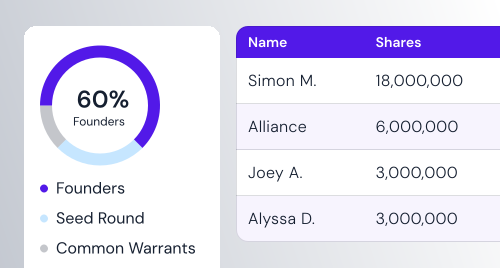
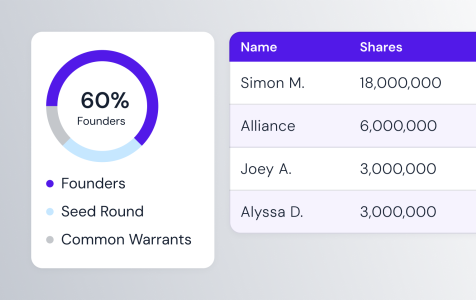
As legal-tech companies grow, their cap tables and ownership structures can become increasingly complex, involving founders, employees, investors, option pools, and multiple funding rounds. What equity-management or governance mistakes do you see founders make early that become costly later?
Putting my solicitor’s hat on, these are the costly mistakes I’ve seen in practice.
Vesting. Without it, a co-founder who steps back, whatever the reason, keeps their shares. The remaining founders keep doing the work without being recognised or rewarded for it, and they lose interest. A company with a good product and a working business can die from that alone. You need a pre-agreed mechanism for what happens if someone leaves.
Not reading the investment documents properly. Liquidation preferences, participation rights, drag-along, and tag-along can all look standard and still work against you. There are well-known cases where a successful company that had raised hundreds of millions was sold, and the investors were paid out through their preferences. The founders and option holders got nothing, and the drag-along meant they couldn’t block the sale.
Option pools, getting them wrong in either direction. Some founders hold back until it’s too late and lose people to companies that can pay much bigger salaries. Others hand out options without proper vesting or performance conditions and end up rewarding people who haven’t delivered.
Letting Companies House filings drift from the cap table. Due diligence will find it, and fixing it against a deadline is expensive.
Looking five years ahead, how do you expect technology to change the way legal services are delivered? What do you think the legal industry is currently underestimating about where this is heading?
I expect demand for legal services to grow. Claims that were never economic to bring will now be brought, and people are starting more businesses, each of which needs legal help. The market will grow bigger.
Hourly billing will give way to fixed fees, and lawyers will spend less time producing documents and more time supervising and deciding.
The winners will be the ones who rebuild the whole workflow instead of just bolting AI on top, make the experience between client and lawyer actually seamless, and take real responsibility for the outcome.
The pressure then moves to the courts. More claims mean more strain on a system that already has backlogs. How the government keeps up will become one of the next big problems.