Diminished Business Value: Causes, Risks, and How to Recover
In this article, we examine the key causes of diminished business value, the risks it creates, and the strategies businesses can adopt to recover and strengthen their valuation.

What’s really driving the drop in your business’s value? It’s rarely one thing. Operational inefficiencies, financial instability, changing market conditions, and limited growth potential can all affect valuation. Often, they interact in ways that make the root cause difficult to pinpoint. Understanding these factors is the first step toward protecting your company’s long-term worth.
Sometimes, decisions that seem completely rational may end up diminishing a business’s value. For instance, Kodak invented the digital camera in the 1970s but sat on that invention for 20 years because they believed digital cameras would cannibalize the profitable film business. Eventually, this decision proved fatal for Kodak, as they could never really recover from the decision to delay an entry into the digital camera market and filed for bankruptcy in 2012.
Key takeaways
- Business value can diminish due to financial, operational, leadership, and market-related factors that affect long-term performance.
- Declining business value can reduce access to funding, lower acquisition potential, weaken competitive positioning, and erode stakeholder confidence.
- Improving financial performance, operational efficiency, and revenue diversification helps strengthen long-term business value.
- Strong leadership, effective governance, and regular business valuations support informed decision-making.
What causes a business’s value to diminish?
A decline in business value rarely stems from a single event. Instead, it is often the result of several underlying issues that gradually affect financial performance, operational stability, and investor confidence. Understanding these causes allows business owners to identify potential risks before they have a lasting impact.
Weak financial performance
Financial performance remains one of the strongest indicators of a company’s value. Declining revenue, shrinking profit margins, inconsistent cash flows, or excessive debt raise concerns about a business’s ability to generate sustainable returns. As financial performance deteriorates, investors and potential buyers become more cautious, resulting in lower valuations.
Operational inefficiencies
Inefficient operations can steadily reduce a company’s profitability and competitiveness. Rising operating costs, outdated processes, supply chain disruptions, and poor resource utilization affect productivity while limiting the company’s ability to respond to changing market conditions. Over time, these inefficiencies affect both current performance and future growth prospects.
Customer concentration
Businesses that rely heavily on a small group of customers face greater valuation risk. Losing a major customer can significantly reduce revenue and create uncertainty about future earnings. This dependence also limits negotiating power, making it less attractive to investors.
Leadership and governance challenges
A company’s leadership has a direct influence on its long-term value. Weak governance, inconsistent strategic direction, frequent leadership changes, or an overreliance on a single founder can create uncertainty about future performance. Investors generally prefer businesses with stable management structures and clearly defined succession plans because they reduce operational risk.
External market pressures
Even financially stable businesses can experience a decline in value when external conditions change. Increased competition, changing customer preferences, economic uncertainty, technological advancements, and regulatory developments can all affect future earnings. Businesses that fail to adapt to these changes often experience slower growth and reduced market confidence.
What happens when business value diminishes?
A decline in business value influences financing opportunities and investor perception, which ultimately lowers the potential for growth in the long term. The following risks often emerge when business value continues to decline.
Reduced access to capital
Investors and lenders carefully evaluate business value before providing capital. When a company’s valuation declines, securing funding often becomes more difficult. Even when financing remains available, businesses may receive less favorable terms that increase the overall cost of capital.
Lower acquisition potential
Business value plays an important role during mergers and acquisitions. A company with declining value may receive lower offers from potential buyers or experience longer negotiations as buyers attempt to account for additional risk. This can reduce the returns business owners expect from a future exit.
Loss of competitive advantage
Businesses with declining value often have fewer resources to invest in innovation, technology, expansion, or talent acquisition. As competitors continue to improve their offerings, the gap gradually widens, making it increasingly difficult to regain market position.
Declining stakeholder confidence
Business value also influences the confidence of employees, customers, and suppliers. A sustained decline in value can create uncertainty about the company’s future, affecting employee retention, customer relationships, and strategic partnerships.
How can businesses recover their value?
Although external market conditions cannot always be controlled, many of the factors that reduce business value can be addressed through strategic action. Businesses that regularly assess their performance and respond proactively are better positioned to strengthen their valuation over time.
Improve financial performance
Strengthening financial fundamentals is often the first step toward recovering business value. Businesses should focus on improving profitability, managing expenses, maintaining healthy cash flows, and reducing unnecessary debt. Strong financial performance demonstrates stability and improves investor confidence.
Increase operational efficiency
Reviewing operational processes helps businesses identify areas where costs can be reduced and productivity can be improved. Adopting more efficient systems and addressing operational bottlenecks enable businesses to improve profitability and move towards a more sustainable and less funding-dependent business model.
Diversify revenue sources
Reducing dependence on a limited number of customers strengthens business resilience. Expanding into new markets, attracting a broader customer base, or introducing additional products and services helps create more stable revenue streams and reduces valuation risk.
Strengthen leadership and governance
Building a capable leadership team and implementing sound governance practices improve organizational stability. Succession planning, clearly defined responsibilities, and effective decision-making processes reassure investors that the business can continue performing successfully despite leadership transitions.
Monitor business value regularly
Business valuation should be viewed as an ongoing process rather than a one-time exercise. Regular valuations help businesses understand how financial performance, operational changes, and market developments influence their value. These insights support better strategic planning and enable business owners to address emerging risks before they become more significant.
FAQs
How does diminished business value affect a company’s 409A valuation?
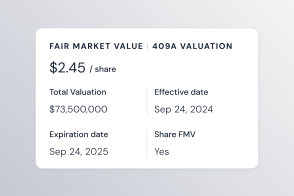
When business value drops, the fair market value of your common stock goes down, so the strike price for new option grants also falls. While this might seem like a benefit for employees, it also signals to your team and job candidates that the company is not as valuable as before.
Can diminished business value increase equity dilution during fundraising?
Yes. If a company raises money at a lower valuation, known as a “down round,” founders and current shareholders have to give up more ownership to get the same amount of funding. This faster dilution can shrink founder equity in future rounds.
How often should startups get a business valuation to catch value decline early?
The IRS generally expects a 409A valuation to be updated at least once every 12 months, or after any material event (e.g., a new funding round, significant revenue change, or leadership transition). According to Eqvista, companies approaching a fundraise or exit benefit from more frequent assessments.
Is diminished business value the same as a temporary revenue dip?
Not always. One bad quarter does not mean the business value has dropped. Diminished value usually means there is a lasting, deeper decline, not just a temporary setback.
Are there tax or compliance implications when business value declines?
This is where things get expensive if you’re not paying attention. When a company’s value drops but its 409A valuation hasn’t been updated to reflect that, stock options may be granted at a strike price that no longer matches fair market value.
Eqvista – Preserve Your Business Value with Reliable Valuation Insights!
Business value is constantly influenced by internal performance and external market conditions. While some factors are beyond a company’s control, many causes of value erosion can be identified and addressed through timely action. By understanding the drivers of diminished business value and monitoring them consistently, businesses will find it easier to navigate challenging market conditions.
Regular business valuations play an important role in this process by providing an objective assessment of a company’s financial position and highlighting opportunities for improvement. If your next fundraise,acquisition, or board meeting depends on knowing what your company is actually worth, a current valuation isn’t optional; it’s essential.
Eqvista provides independent business valuation services that help businesses understand the factors affecting their value and make confident strategic decisions. Contact us for reports that provide better visibility into factors that determine your company’s growth!
Start Managing Your Equity with Eqvista
Build your cap table, manage equity, and keep ownership organized as your company grows.