Bombas pitched for $200,000 and now reports $1.3 billion in lifetime sales. ZipZ Wine landed the biggest check in the show’s history, $2.5 million, and the company later faded from the market. The gap between those two outcomes shows what a Shark Tank deal really is: a pricing decision that changes who owns the company.
This report ranks the sharks by net worth, the five biggest deals struck on air, and the ten most successful companies by lifetime sales.
Key Takeaways
- Todd Graves of Raising Cane’s is the richest shark to appear on the show, at about $20 billion. Mark Cuban follows at about $6.8 billion.
- ZipZ Wine holds the record for the largest finalized deal: $2.5 million for 10%, which implies a $25 million valuation.
- Bombas leads all companies with $1.3 billion in lifetime sales from a $200,000 investment.
- Eight of the nine ranked companies that gave up equity were priced below $4 million at the pitch. Only Everlywell, at roughly $20 million, was valued higher.
- Not every on-air deal closes. Vengo’s $2 million loan deal and xCraft’s five-shark deal were both reported as not completed.

How a Shark Tank Deal Is Priced
Every deal on the show reduces to one calculation. The shark’s investment divided by the equity percentage gives the implied company valuation.
Implied valuation = Investment ÷ Equity percentage
Example: Bombas sold 17.5% for $200,000. $200,000 ÷ 0.175 = about $1.14 million. Scrub Daddy gave 20% for $200,000, a $1 million valuation. Ten Thirty One Productions gave 20% for $2 million, a $10 million valuation.
Equity is the part founders often underweight. A 20% stake sold at $1 million permanently reduces the founder’s share in every later round, which is why dilution should be modeled before a pitch.
Shark Tank Cast Net Worth 2026
Six of the twelve sharks below are worth more than $600 million. Wealth on the panel is concentrated at the top; Graves alone is worth more than the other eleven combined.
| Shark | Status on the show | Net worth | Basis | |
|---|---|---|---|---|
| 1 | Todd Graves | Guest shark, Season 16 (2024–25) | $20 billion | Forbes, Oct. 2026 |
| 2 | Mark Cuban | Former; guest Season 2, regular Seasons 3–16 (2011–2025) | $6.8 billion | Forbes, Sept. 2026 |
| 3 | Daniel Lubetzky | Guest from Season 11; main shark since Season 16 | $2.3 billion | Forbes, Oct. 2026 |
| 4 | Chris Sacca | Former guest, Seasons 7–8 (2015–2017) | $1.2 billion | Forbes, 2021 (latest) |
| 5 | Kendra Scott | Guest shark (Seasons 12, 14, 16, 17) | $900 million | Forbes, June 2025 |
| 6 | Jamie Kern Lima | Guest shark, Season 16 | $670 million | Forbes, June 2025 |
| 7 | Robert Herjavec | Original shark, Season 1 to present | $300–600 million | Estimate |
| 8 | Kevin O’Leary | Original shark, Season 1 to present | About $400 million | Estimate |
| 9 | Kevin Harrington | Former, Seasons 1–2 (2009–2011) | About $400 million | Estimate |
| 10 | Daymond John | Original shark, Season 1 to present | About $350 million | Estimate |
| 11 | Lori Greiner | Guest Season 3; regular Season 4 to present | $150–250 million | Estimate |
| 12 | Barbara Corcoran | Original shark, Season 1 to present | About $100 million | Estimate |
Source: Forbes profiles for Graves, Lubetzky, Sacca, Scott and Kern Lima; Cuban’s figure from Forbes reporting. Estimates for the remaining sharks come from published rankings and vary by outlet, so ranges are shown where sources disagree.
Biggest Deals Struck on Shark Tank
ZipZ Wine set the record in December 2014, raising the previous high of $2 million set by Ten Thirty One Productions. Larger handshakes have aired, such as Robert Herjavec’s $5 million offer to Zero Pollution Motors, but they collapsed in due diligence. The table below ranks the five largest deals by headline dollars, with each deal’s status as reported.
| Company | Founder(s) | Season / episode | Shark(s) | Deal | Status | |
|---|---|---|---|---|---|---|
| 1 | ZipZ Wine | Andrew McMurray | Season 6, Ep. 11 (Dec. 5, 2014) | Kevin O’Leary | 2.5Mfor10%(25M valuation) | Accepted on air, contingent on a Costco listing; company has since stopped operating |
| 2 | Ten Thirty One Productions | Melissa Carbone, Alyson Richards | Season 5, Ep. 6 (Oct. 25, 2013) | Mark Cuban | 2Mfor20%(10M valuation) | Closed; later acquired by Thirteenth Floor Entertainment |
| 3 | Vengo Labs | Brian Shimmerlik, Steven Bofill | Season 7 (Mar. 18, 2016) | Kevin O’Leary, Lori Greiner | $2M as a 7% loan plus 3% equity | Reported as not completed; Vengo raised $7M elsewhere |
| 4 | Numilk | Ari Tolwin, Joe Savino | Season 12, Ep. 18 (Mar. 26, 2021) | Mark Cuban | $1M for 7%, plus optional $1M loan with 3% more equity (up to $2M for 10%) | Reported closed; terms may have changed |
| 5 | Rugged Maniac | Rob Dickens, Brad Scudder | Season 5 (2013–14) | Mark Cuban | $1.75M for 25% | Closed; Cuban sold his stake for about double in 2018 |
Source: CNBC (ZipZ, Ten Thirty One, Rugged Maniac); Looper on Vengo; Looper on Numilk; episode data from the list of Shark Tank episodes. Rankings use on-air headline amounts. Loan portions are included where stated.
Two other well-known deals sit just outside this table. xCraft drew $1.5 million for 25% from all five sharks in Season 7, which implies a $6 million valuation, but the deal reportedly never closed. Fizzics’ $2 million deal with Cuban and Greiner is excluded because its closing could not be documented.
Most Successful Shark Tank Companies
Success here is measured by lifetime sales through May 2023, the latest figures published with Sony Pictures Television data. The ranking rewards distribution reach more than deal size. Nine of the ten took $350,000 or less on air.
| Company | Founder(s) | Season / episode | Shark | Deal | Implied valuation | Lifetime sales | |
|---|---|---|---|---|---|---|---|
| 1 | Bombas | David Heath, Randy Goldberg | S6, Ep. 1 | Daymond John | $200K for 17.5% | $1.14M | $1.3B |
| 2 | Everlywell | Julia Cheek | S9, Ep. 12 | Lori Greiner | $1M credit line for 5% | $20M | $1.1B |
| 3 | Scrub Daddy | Aaron Krause | S4, Ep. 7 | Lori Greiner | $200K for 20% | $1M | $926M |
| 4 | The Bouqs Co. | John Tabis | S5, Ep. 27 | None on air | No deal | N/A | $640M |
| 5 | Cousins Maine Lobster | Jim Tselikis, Sabin Lomac | S4, Ep. 6 | Barbara Corcoran | $55K for 15% | $367K | $585M |
| 6 | The Comfy | Brian and Michael Speciale | S9, Ep. 13 | Barbara Corcoran | $50K for 30% | $167K | $550M |
| 7 | Dude Wipes | Sean Riley, Ryan Meegan, Jeff Klimkowski | S7, Ep. 4 | Mark Cuban | $300K for 25% | $1.2M | $341M |
| 8 | Tipsy Elves | Evan Mendelsohn, Nick Morton | S5, Ep. 12 | Robert Herjavec | $100K for 10% | $1M | $317M |
| 9 | Lovepop | Wombi Rose, John Wise | S7 (Dec. 2015) | Kevin O’Leary | $300K for 15% | $2M | $304M |
| 10 | Squatty Potty | Bobby Edwards, Judy Edwards | S6, Ep. 9 | Lori Greiner | $350K for 10% | $3.5M | $260M |
Source: lifetime sales list based on Sony Pictures Television data (as of May 2023) and ABC’s countdown as reported by Looper.
Deal terms are the final on-air terms. Implied valuation is investment ÷ equity; Everlywell’s figure treats the credit line as the investment. The Bouqs pitched in Season 5 without a deal, and Robert Herjavec invested years later.
The Bouqs show the other side of the show. Every shark passed in May 2014, yet the company reached $640 million in lifetime sales. A deal on air helps, but it is not required for a company to reach scale.
Results by Shark
Counting the ten companies above, one pattern stands out, a few sharks account for most of the winners.
Lori Greiner
Greiner backed three of the ten: Everlywell, Scrub Daddy and Squatty Potty, with combined lifetime sales of about $2.3 billion. Everlywell was her only deal in the group structured as credit.
Mark Cuban
Cuban’s one entry is Dude Wipes, but he wrote the largest solo equity check in the group of deals above, $2 million for Ten Thirty One Productions, and two more of the five biggest deals, Numilk and Rugged Maniac.
Barbara Corcoran
Corcoran invested the smallest amounts, $55,000 in Cousins Maine Lobster and $50,000 in The Comfy, and both finished in the top six by sales.
Daymond John, Robert Herjavec and Kevin O’Leary
John backed Bombas, the top company overall. Herjavec backed Tipsy Elves and later invested in The Bouqs. O’Leary made the largest finalized deal with ZipZ and also backed Lovepop.
What Founders Can Take From These Deals
- Calculate your implied valuation before you pitch. If your ask works out to a number you cannot defend with revenue, expect a counter offer on equity.
- Compare cash and structure, not just percentage. Vengo, Numilk and Everlywell all paired lower equity with loans or credit lines, which trade ownership for repayment obligations.
- Model the cap table after the deal. Every stake you sell, including advisory shares and multi-shark splits, changes what you own going into the next round.
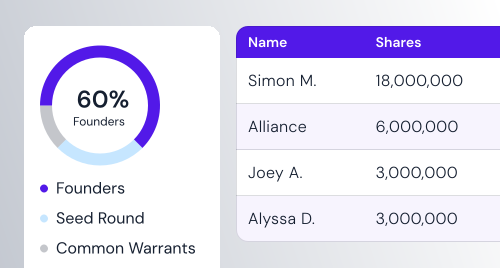
Example: a founder who sells 25% to five investors at 5% each, as xCraft proposed, keeps 75% before any option pool or future round. After a 20% seed round, the founder holds 60%.
FAQs
Here are quick answers to the most common questions about Shark Tank deals:
Not automatically. An on-air agreement is subject to due diligence after filming. Herjavec’s $5 million Zero Pollution Motors offer collapsed in diligence, and the loan portion of Vengo’s deal was reported as never completed.
The equity percentage falls, but the founder takes on debt with interest and a repayment schedule. Everlywell took a credit line for 5% equity, and Vengo accepted a 7% loan with 3% equity. Compare the total cost of the loan against the value of the shares saved.
Each investor holds a slice of the percentage, so the cap table gains more holders without changing the total sold. xCraft’s five sharks would have held 5% each, 25% combined, leaving the founders 75% before later rounds.
It can. The valuation set on air becomes a reference point for later investors, which is why a high headline price needs revenue to support it. Vengo later raised $7 million from other investors after its on-air deal.
Once it grants stock options to employees. A priced investment is a material event, so an earlier 409A report no longer reflects fair market value and should be refreshed before new options are granted.
Turn Your Pitch Math Into a Cap Table You Can Trust
A shark-style offer or a seed term sheet looks different once you see the cap table behind it. Before you accept any cheque, model what the deal does to your ownership, your option pool and your next round. Eqvista’s cap table software shows dilution round by round, and a 409A valuation keeps your option pricing compliant once you raise.
Have an offer on the table? Contact us and we will help you run the numbers before you commit.