Secondary Transactions – Converting Notes into shares Using Price Per Share Method
Converting notes into company shares is one of the most important transactions an investor can have in a company. That is why having a good cap table platform is important to keep track of all the company’s convertible note conversions.
Converting notes into shares
Here is the step-by-step guide on how to convert notes on the Eqvista app.
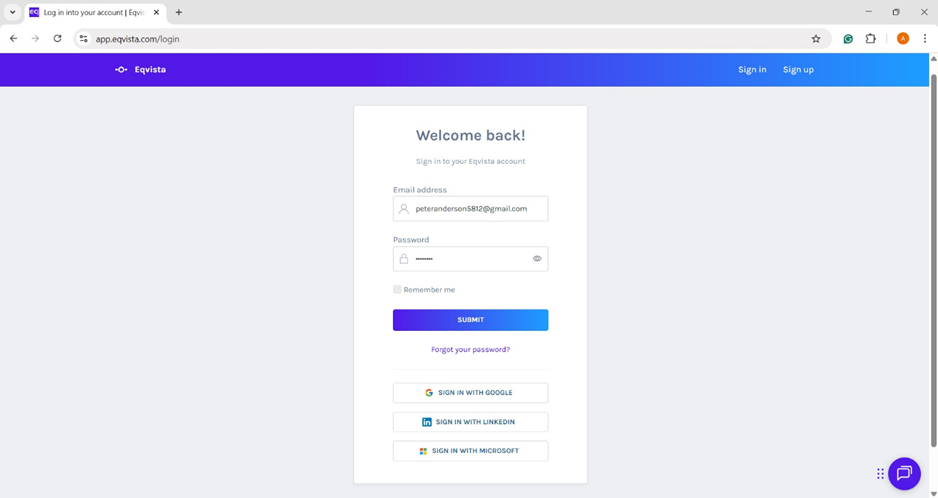
Step 1: Log into your Eqvista account and select your company account.
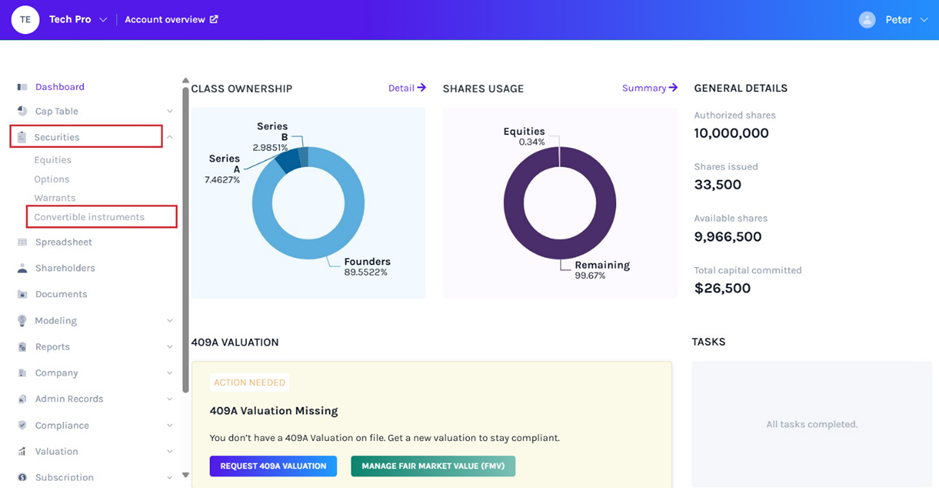
You will reach the company’s dashboard. From here, click on “Securities” from the left-hand side and click on “Convertible Instruments”.
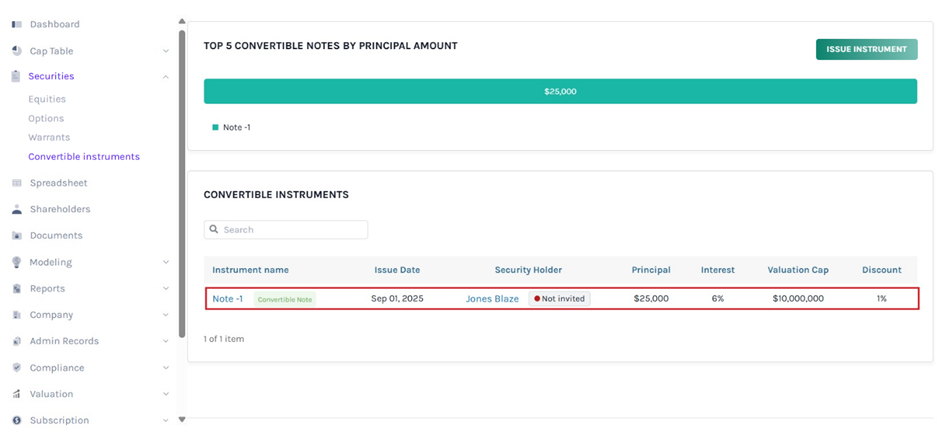
Step 2: You will be redirected to the following page. From here, we will click on “Note 1”.
Step 3: You will then reach the page where you can see the details of “Note 1”. Click on the button stated “Actions” on the top right-hand side. From the mini drop-down menu, click on “Convert to Stock”.
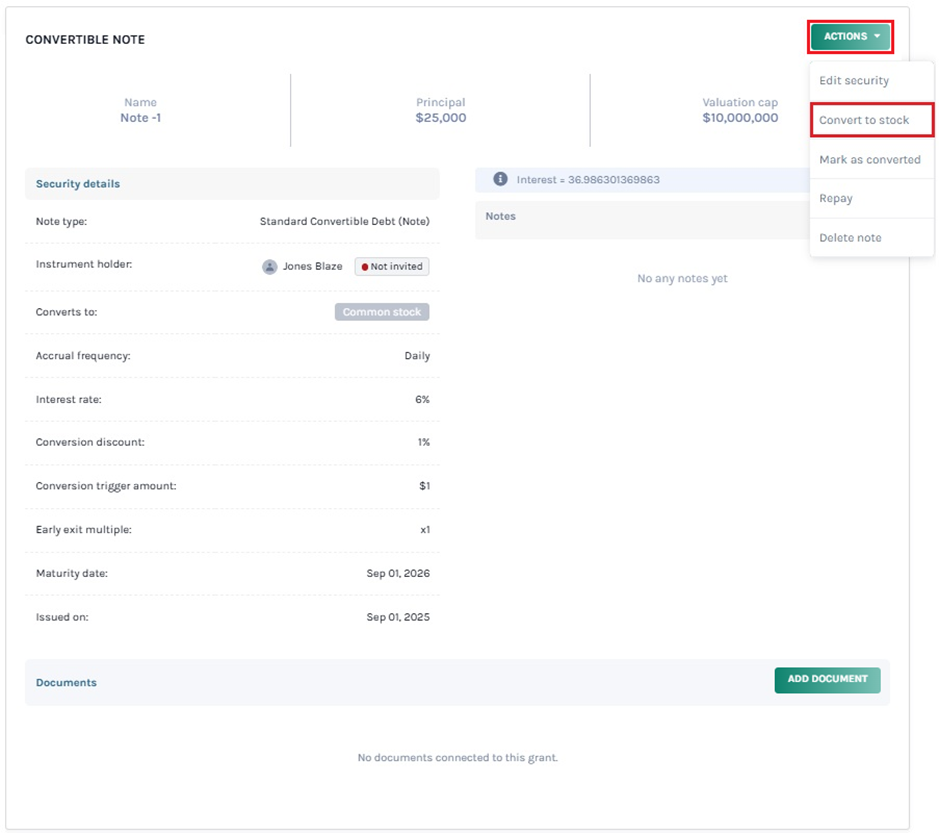
Step 4: Once you do this, a new window will appear as shown below.
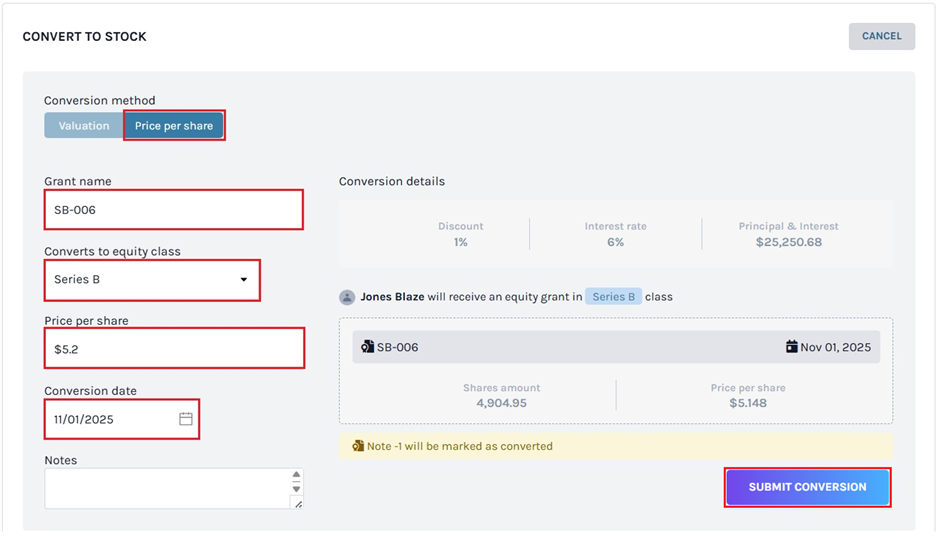
Here, you must first select the conversion method. There are two options; one is based on the valuation and the other is based on the price per share.
Note: You can also convert to stock using the valuation method by clicking “Valuation”. To learn how to convert to stock using valuation, check out the support article!
In this case, we selected the option of price per share. You will need to fill in the details to convert the note into shares such as the new share name, the security class to convert to, and the price per share along with notes, if needed.
Then, the conversion date will be automatically filled. If the transfer date is not today, then you can edit that as well. As you edit the details, you will see the right-side panel updating as well.
Note: You can see the shares amount the person will get after the conversion and the price per share based on the convertible instrument plan.
Once done, you can click on “Submit Conversion”.
Step 5: When you do this, you will reach a page where you can see the note is converted to stock.
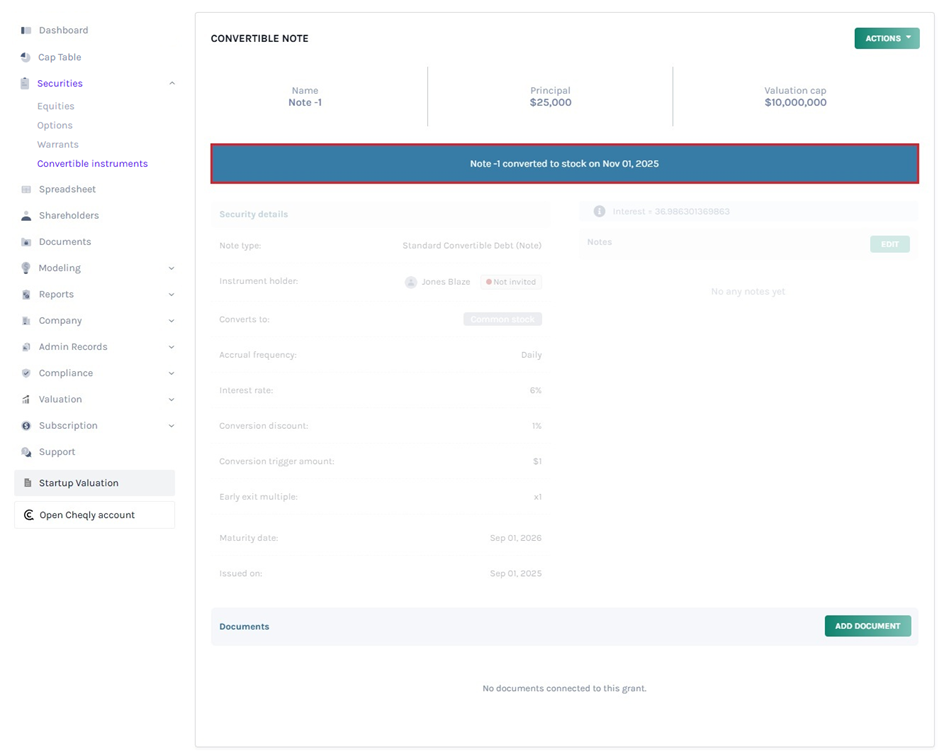
Step 6: If you want to see the new share details, go back to the “Equities” page by clicking on “Securities” and then on “Equities”. Once you get here, click on the “Series B” equity class since the shares were converted to this class and you will get the list of shareholders who have shares in the class as shown below:
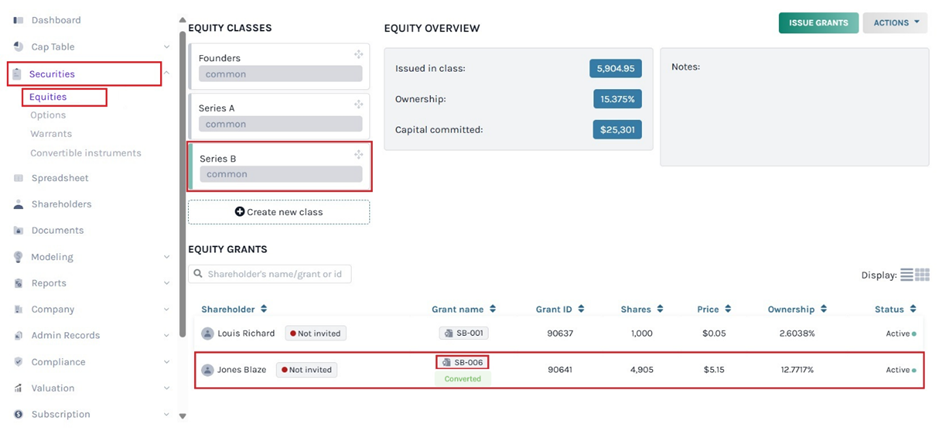
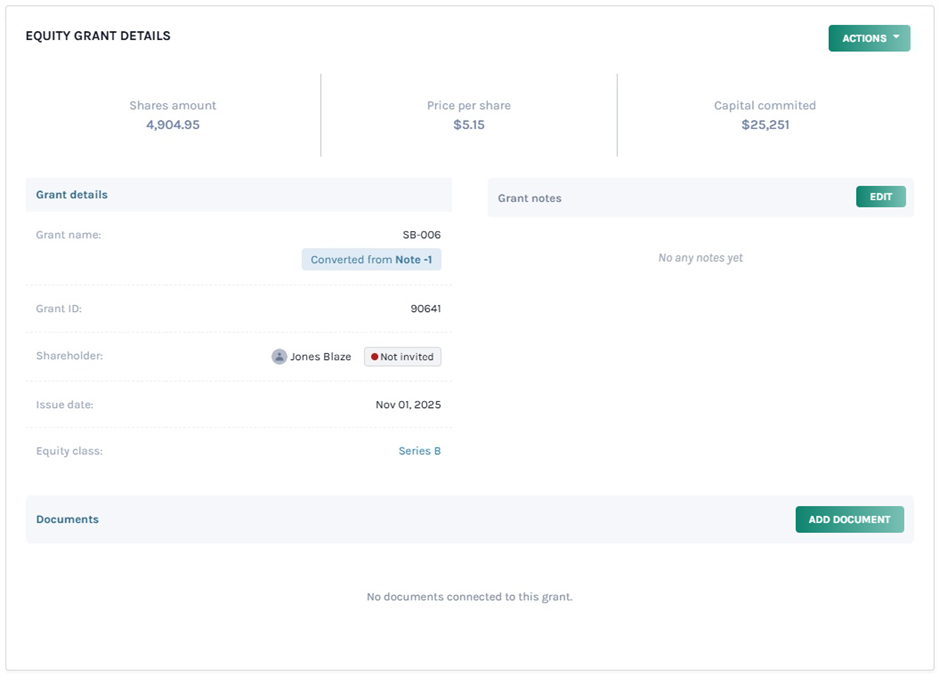
For more details on the conversion and the grant, click on the share name here. In this case, it is – “SB-006”.
Step 7: When you do this, you will reach the page where you can now see the details of this conversion.
Note: You can add document to the grant by clicking on “Add Document”. Check out the support article to know more about adding documents to grants.
However, this does not show how it affects the secondary transactions in the company. The next step will show this.
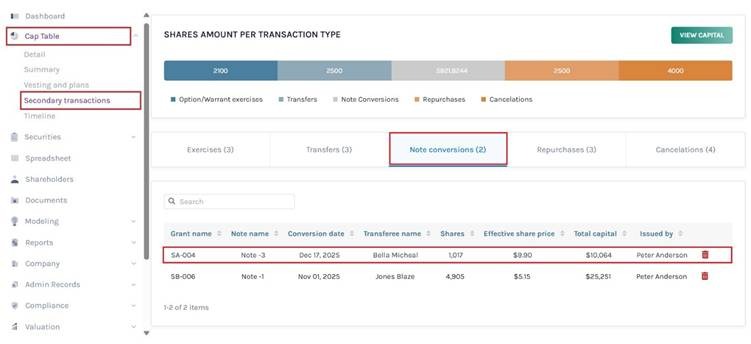
Step 8: To see how it affects the secondary transactions, click on “Cap Table” on the left-side menu and “Secondary Transactions” from the drop-down menu that appears. You will be directed to the following page.
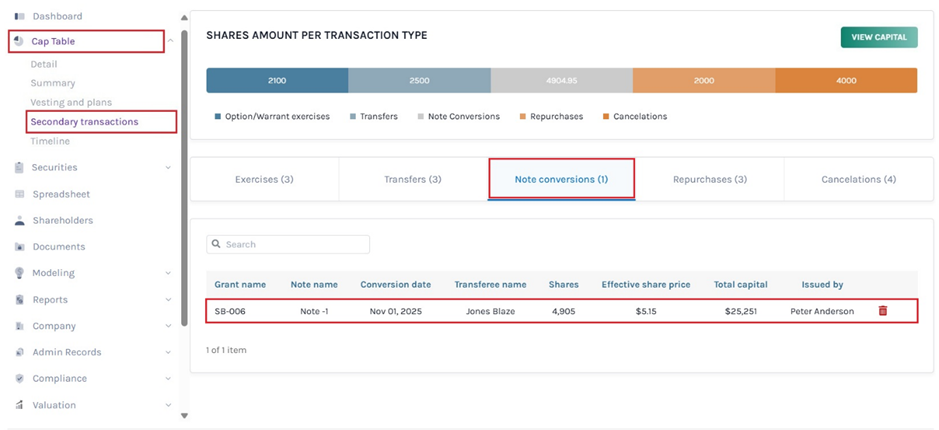
On this page, click on the tab that states “Note Conversions” as shown above. With this, you will see the conversion you just made and how it is shown in the secondary transactions.
Conversion using spreadsheet
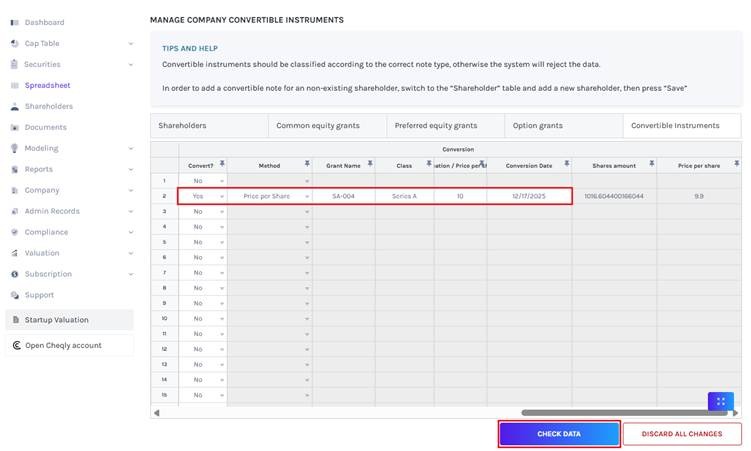
Step 9: Suppose you want to perform conversion using the spreadsheet feature. At the top of the table, click on “Convertible Instruments”. Under the Conversion section, the first one is “Conversion” which provides two options: “Yes” or “No”. Once you select the option, choose the “Method” from the drop-down menu.
In this case, select “Price per share” method, enter the grant name, class, valuation, and conversion date. Based on the price per share entered, the share amount and price per share will be automatically displayed as shown below.
After adding the details, click on “Check Data”. If you want to cancel the process, click “Discard all Changes”.
Step 10: Once your details have been checked, a data validation message will appear: either the entered details are correct and you can save them, or some information may be missing or incorrect.
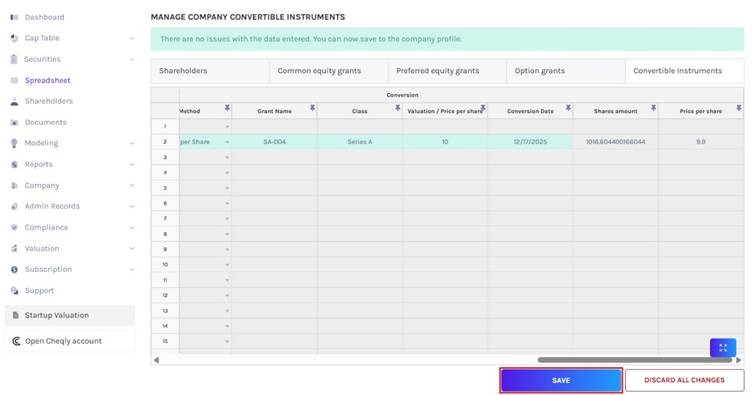
When there are some issues or missing information, the validation message will appear in “Red” along with the details of the issue.
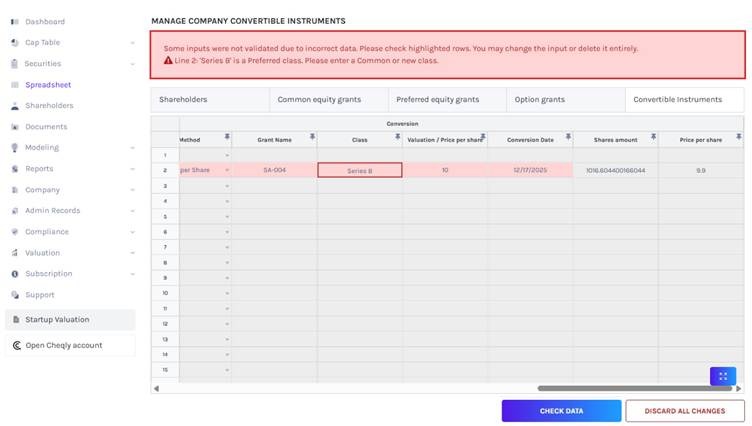
Once the details have been checked, click on “Save”.
Step 11: The record of the conversion can be seen by clicking “Cap Table” on the left side to get a drop-down menu and selecting “Secondary Transactions”. On this page, click on “Conversions” to verify if the grant is converted.
And just like this, you can easily convert notes into shares. To know more about how to use the Eqvista application, check out our support articles here!