Adding New Company
If you are new to Eqvista, you should know that Eqvista is a very easy-to-use application. You can easily create your profile and the company’s profile before you begin to issue shares to the shareholders.
Add a new company on Eqvista
On Eqvista, you can create your account and company in simple steps to issue shares. To help you better, here is a step-by-step guide on how to add a new company on Eqvista.
Step 1: Log into your account on Eqvista, or create an account if you have not yet signed up. Learn how to create an account on Eqvista here.
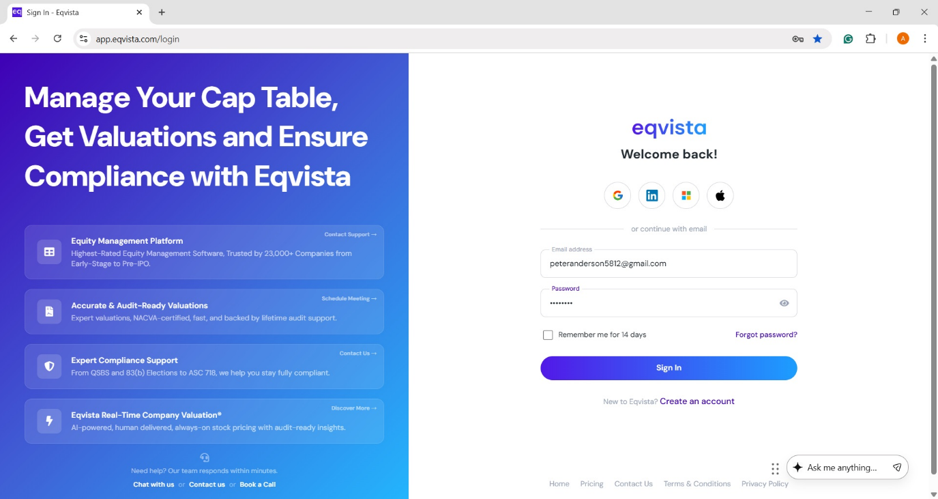
Once you have logged into your account, you will be directed to the dashboard and select a company account you have already created. There are two ways in which you can create a company.
Method 1
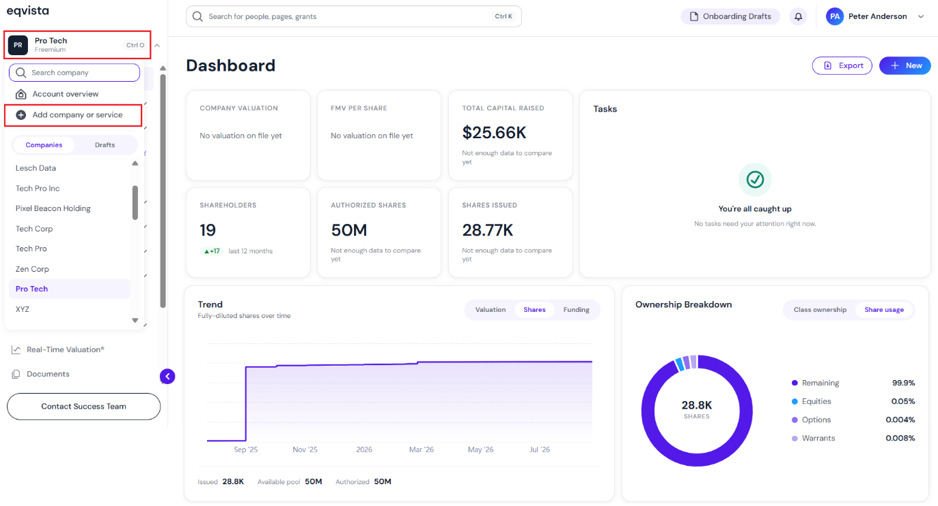
On the dashboard, click on “Company Name” on the left-hand side to get a drop-down menu and select “Add Company or Service”.
Method 2
On the dashboard, click on “New” on the right-hand side to get a drop-down menu and select “New Company”.
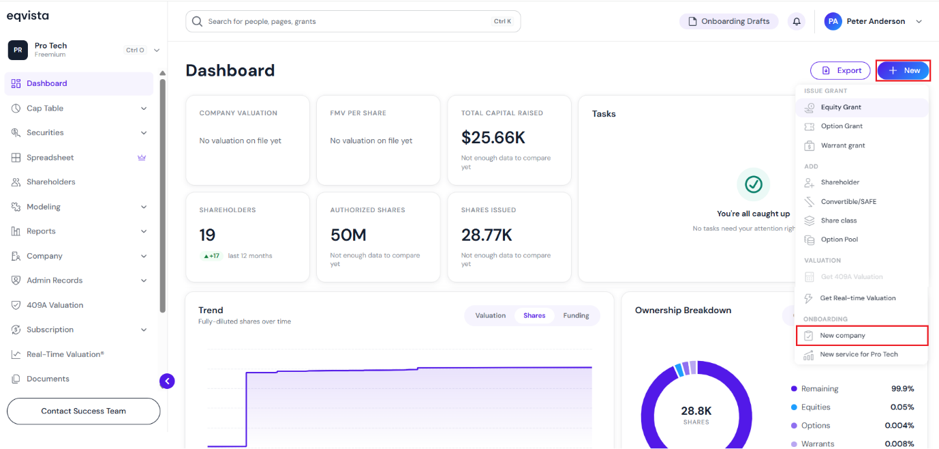
Now let us assume you want to create a new one. Click on “New Company”, and you will reach the first step toward the creation of a new company.
Step 2: Whether you have just logged into your new Eqvista account or clicked on “New Company or Add Company or Service ”, you will be directed to the following page.
Note: You can also add multiple companies by clicking “Bulk Import”. Check out the support article to learn more about bulk import.
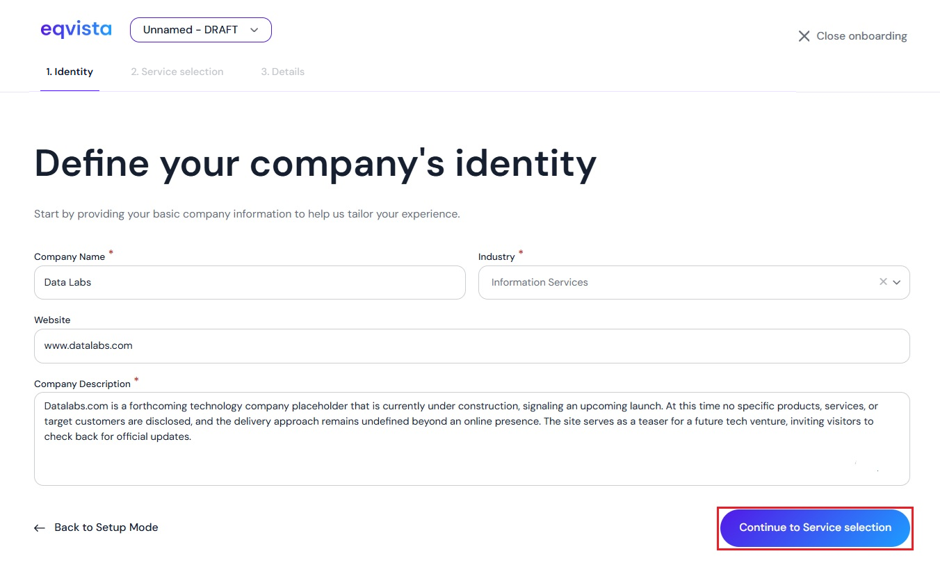
In this step, you need to add all the details of your company including the company name, the industry, the webiste, and the company description. Once you have added all these details, click on “Continue to Service Selection ”.
Step 3: Once you click, you will be directed to select your services by choosing the modules that best fit your company.
Note: If you’re unsure about the services or need assistance, click on the “Book a call” button.
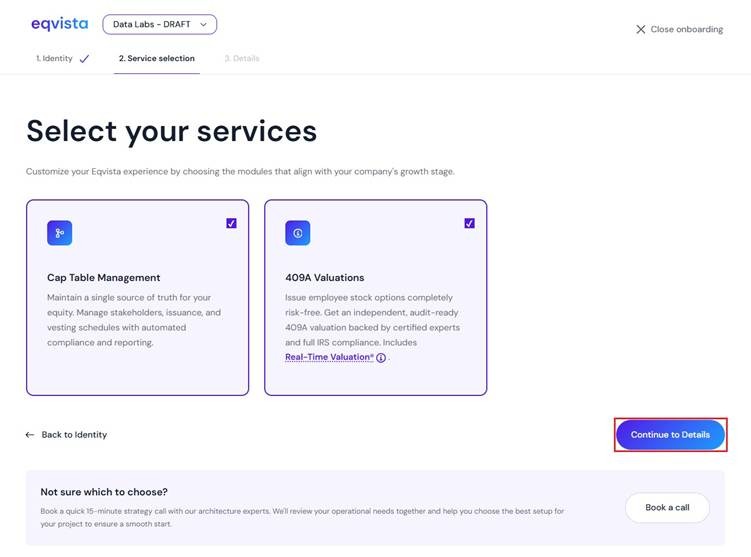
After choosing your services, click on “Continue to Details”.
Step 4: Here, you will need to add details such as company type, incorporation date, country of origin, currency, number of company shares, and par value.
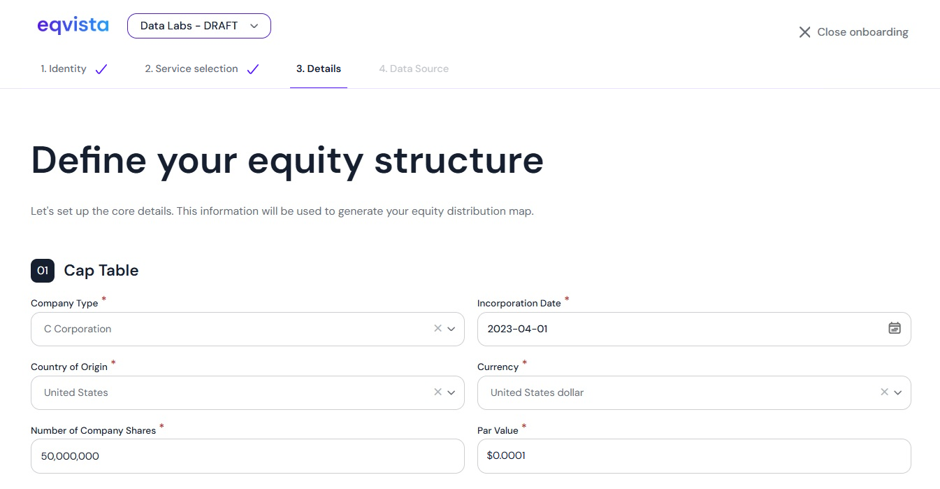
Note: When you register your company and obtain the incorporation certificate from the government, it comes with the number of shares that your company has. You can get these details from the Company’s Articles of Incorporation. So, when creating your company account, do refer to it.
Note: If you have not entered the right number of shares and share value, you can edit them after the company is created. To know how to edit the shares, check out the support article here.
Choose if you are the founder or representative
Step 5: In the next step, you will get the option to choose if you are the founder or representative. By selecting either one, you will then have to add some information accordingly.
We will explain both the possibilities below in detail:
Situation 1 – “I’m a Founder”
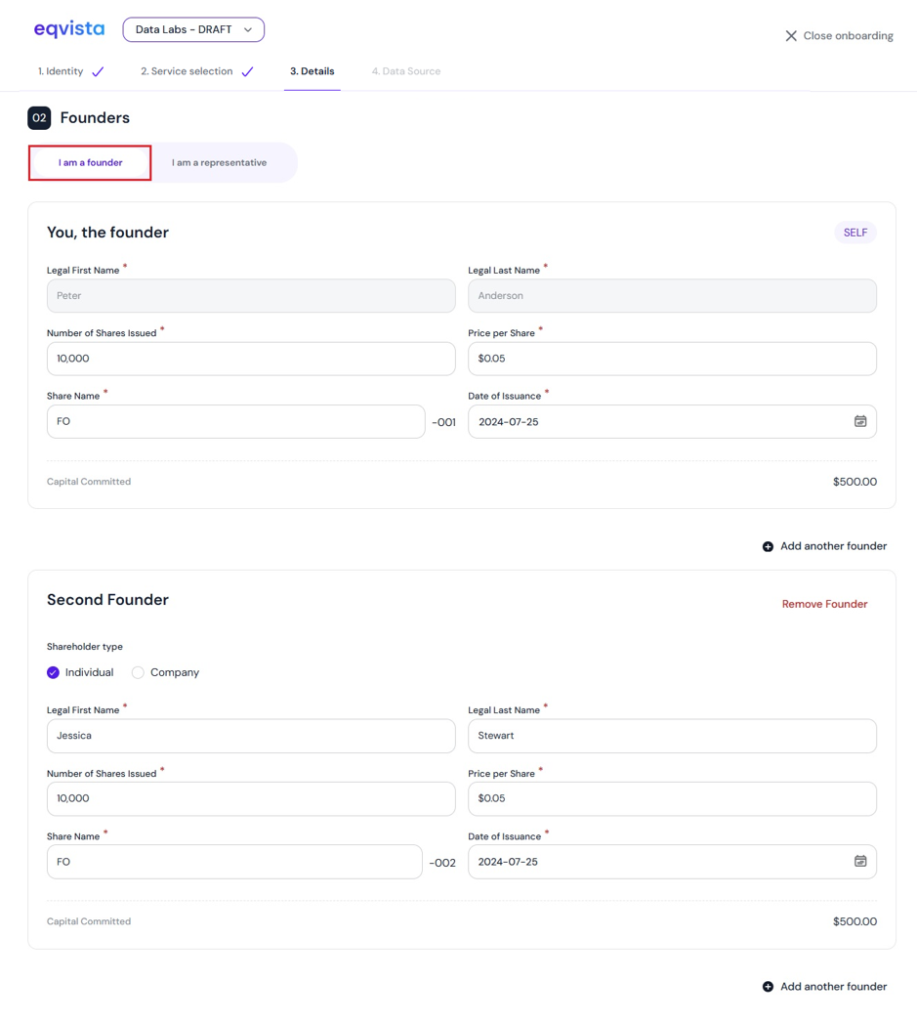
Assuming that you selected “I’m a Founder” the following page would appear. Here, you will see your name already added in the spaces provided. You cannot edit the field as it is based on what you added when creating the profile.
Other than your name, you will also have to add details like the date of issuance of shares, the number of shares you have been issued, the price of the shares on the day of issuance, and the share name. The capital committed will appear automatically at the bottom-right based on the entered number of shares issued and price per share.
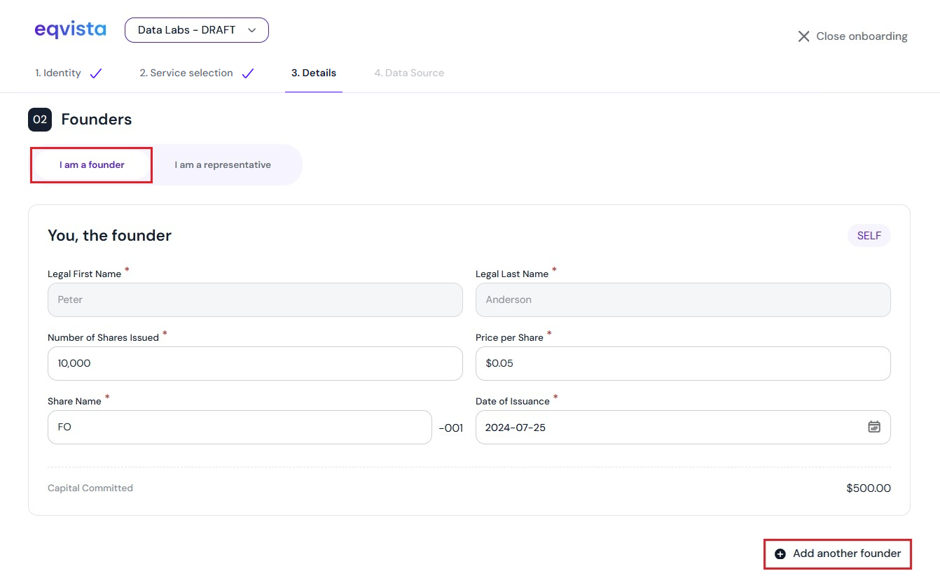
Note: You can also add another founder to the company. Once you do this, a drop-down box will appear as shown below where you can add the details of the next founder.
Situation 2 – “I’m a Representative”
In the second situation, let us say that you are not the founder of the company and select the option “I’m a Representative”.
When you are adding the founder, you will first have to select if the founder is an individual or a company.
#Option 1 – Individual
In case, we selected the option “Individual”. For this, you will have the details of the founder according to the fields available.
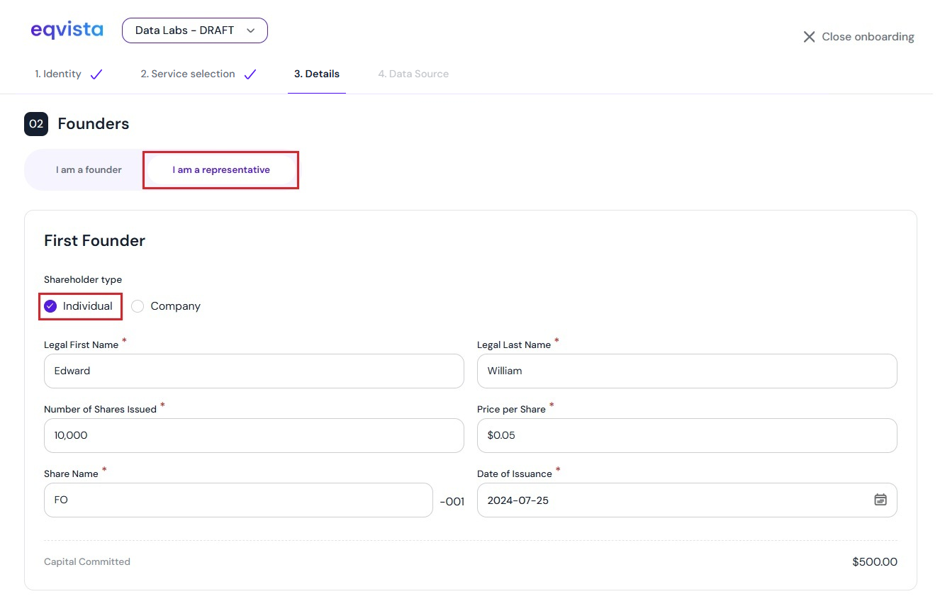
As you can see, you will have to add the legal first name and the legal last name of the founder along with their other details like the date of issuance, number of shares issued, price per share, and the share name (which is the share certificate number) to issue the shares to them from the founder’s stock.
#Option 2 – Company
In case you select the option of a “Company”, these are the fields you will have to fill, as shown below.
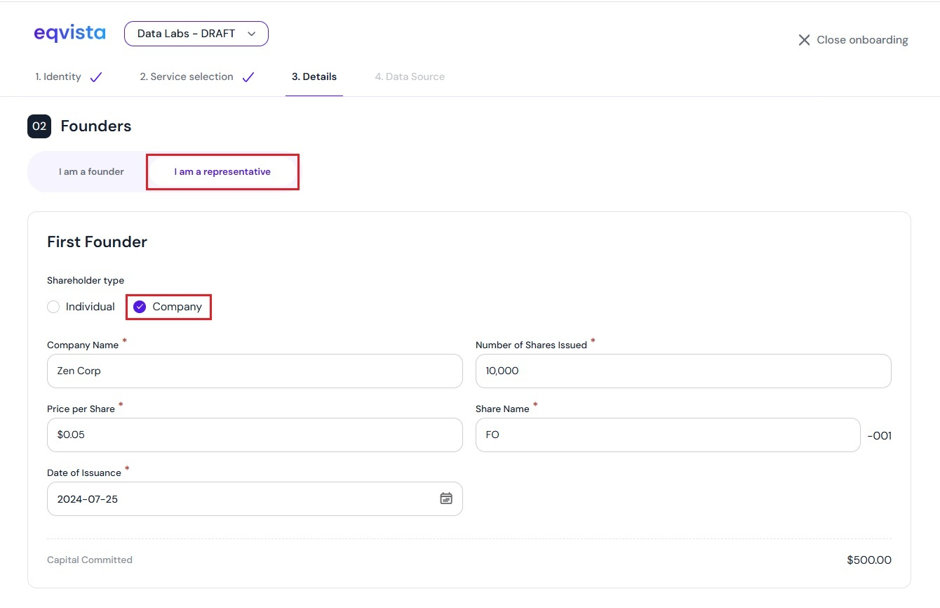
You will have to add the company name, while the rest of the details are the same as the ones shared above.
If there is more than one founder in the company, you can click on the option “Add a Founder” and put in their details just like you did for the first founder.
After filling in the cap table details, fill in the 409A valuation details such as valuation date, phone, business nature, approximate annual revenue, and select whether you have a recent funding round from the drop-down menu.
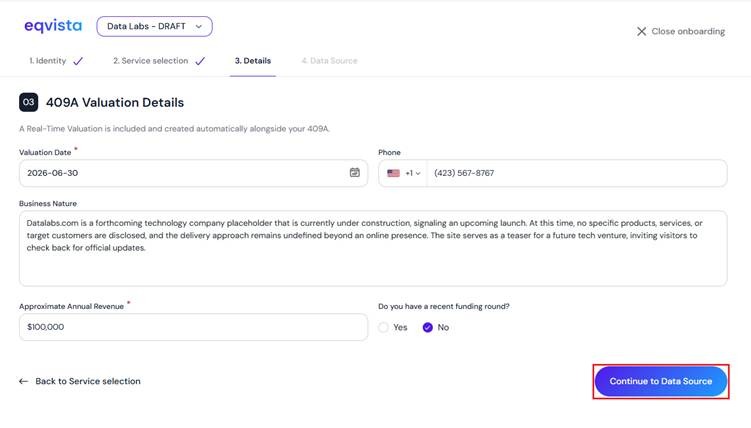
Once done, click on “Continue to Data Source”.
Step 6: Then, you will be directed to choose the method to connect your financial data – connect to QuickBooks or manual document upload.
Note: You can skip this step and manually enter your financial metrics later. You will be able to manage your Real-Time Valuation data sources in Company Profile Overview > Financial Statements at any time.
In this case, we have selected the option “Connect to QuickBooks”.
QuickBook Integration
Connect each company’s financials from QuickBooks to build its real-time valuation. QuickBooks is optional, and any company you leave unconnected will use the figures from your import instead.
Note: Connect a company to import its financials and build a real-time valuation automatically. Check out the support article to learn more about connecting QuickBooks in real-time valuation.
Once you click “Connect QuickBooks”, a panel will appear to fill in the period start and period end to pull financial data from QuickBooks for a custom date range.
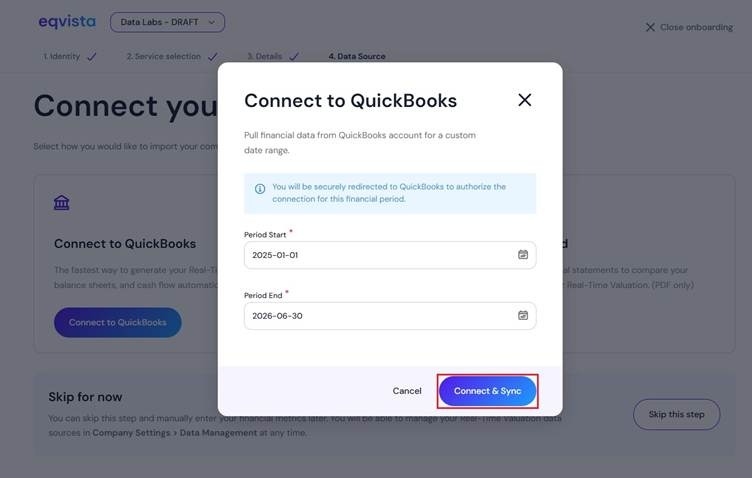
Once done, click on “Connect & Sync”.
Then, you will be redirected to enter the email or User ID of QuickBooks as shown below.
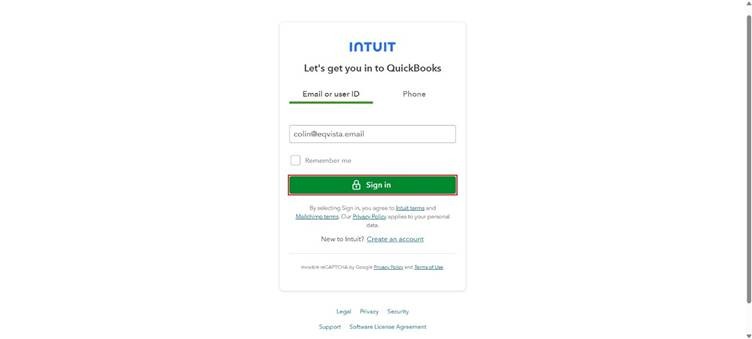
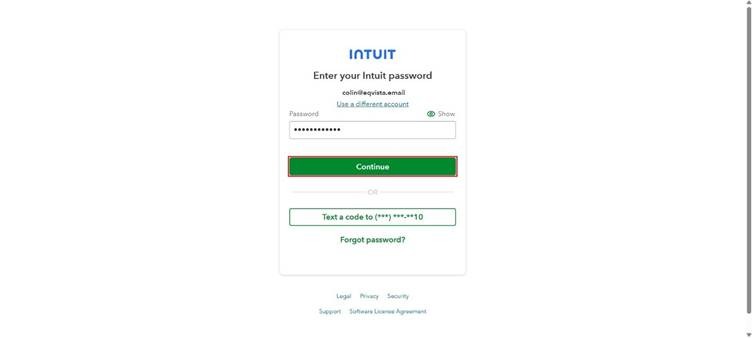
Once you click “Sign in”, you will be redirected to enter your password and click on “Continue”.
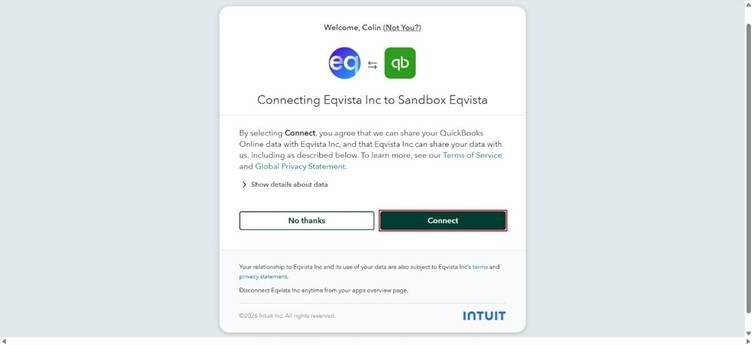
Once you do this, you will be directed to the following page. By selecting “Connect”, you agree that we can share your QuickBooks Online data with Eqvista.
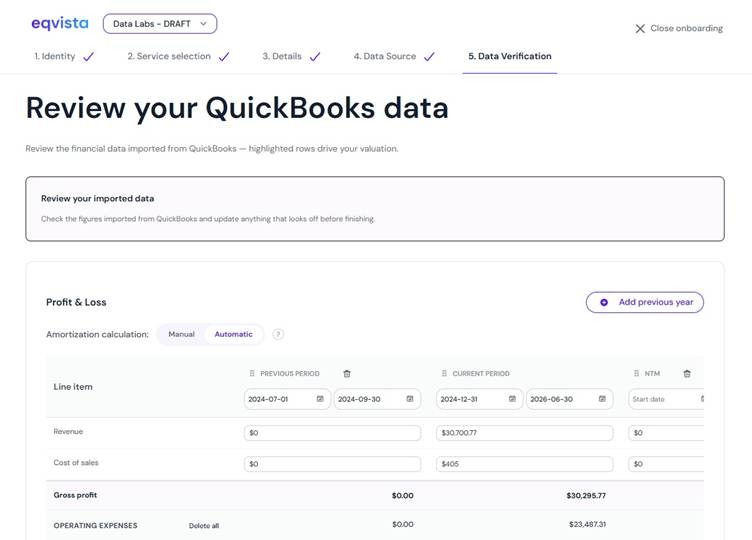
Then, you will be directed to verify the financial data pulled from QuickBooks for the entered period.
Now, after you have added everything that you wish to add click on “Finish Onboarding”.
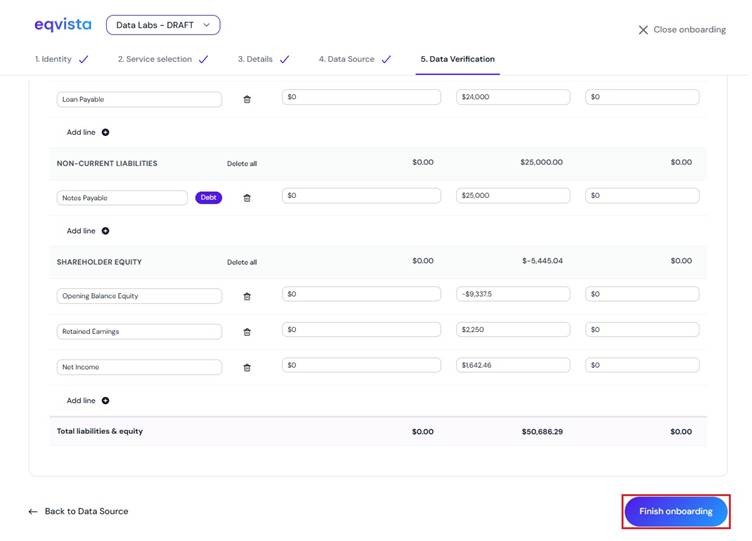
Step 7: When you click “Finish Onboarding”, you will be directed to the main dashboard of the company. Check out this support article to learn how to view your dashboard.
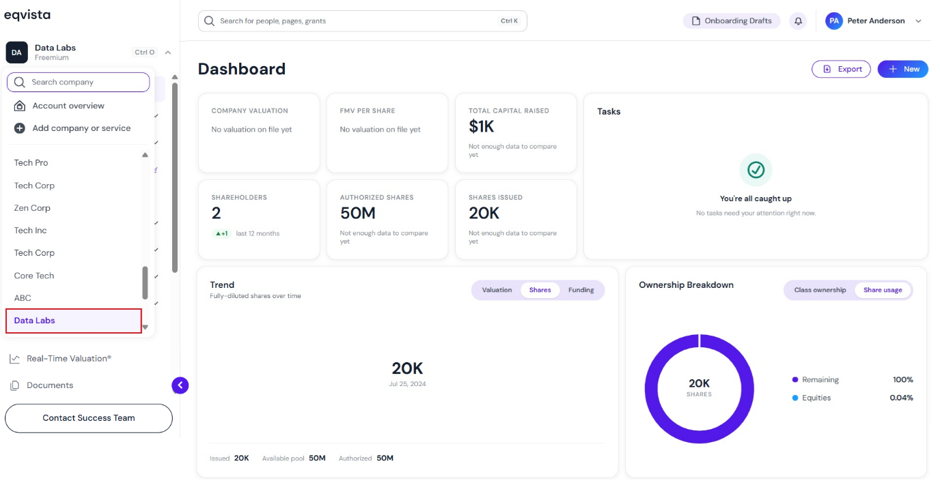
Further, you can upgrade your account to premium subscription to have access to unlimited features. To know more about it, check out the FAQ!
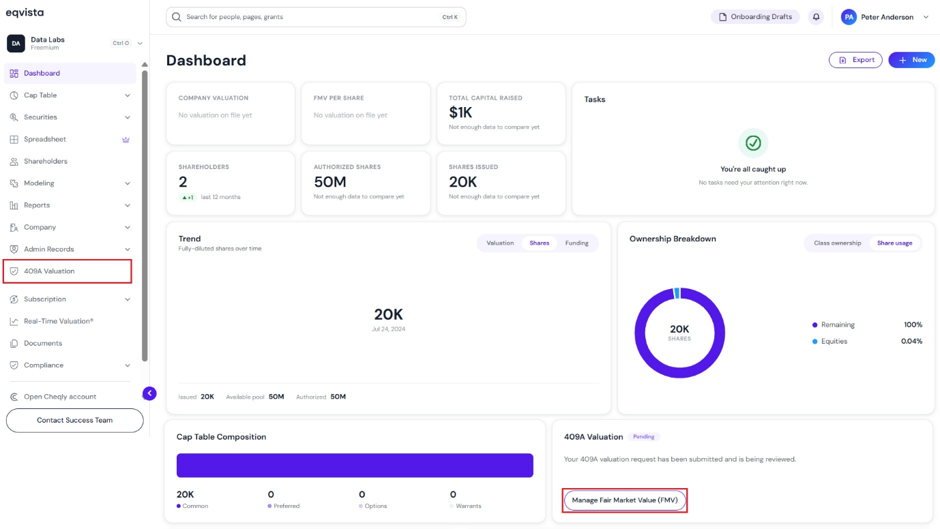
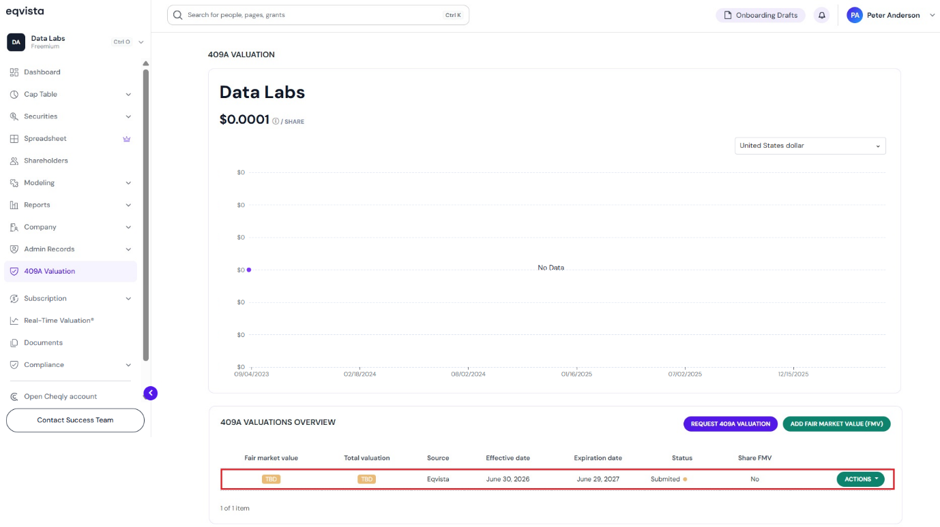
Step 8: The services added for the company are cap table management and 409A valuation. The 409A valuation can be viewed by clicking on “409A Valuation” on the left side of the dashboard or by clicking on “Manage Fair Market Value (FMV)”.
All the valuation results will be updated here and a graph will be shown.
Note: A 409A valuation is applicable for 12 months or year after the valuation date unless there is a significant material event.
By clicking on “Add Fair Market Value“, you can add fair market value. To share and edit the fair market value entered, check out the respective support article.
The “TBD” can only be deleted by clicking on “Actions”.
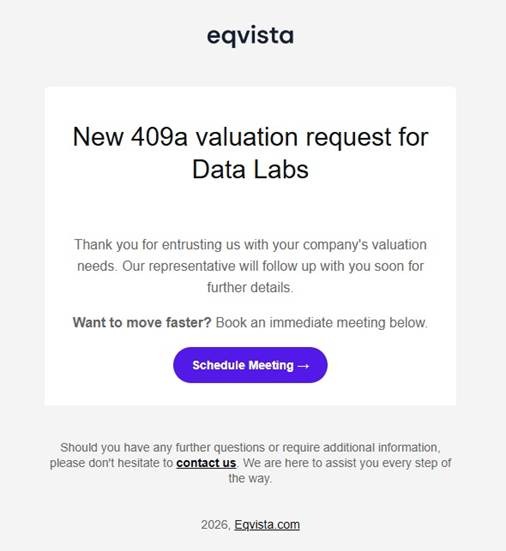
You will receive an email confirming that your request has been successfully submitted along with an option to “Schedule Meeting”.
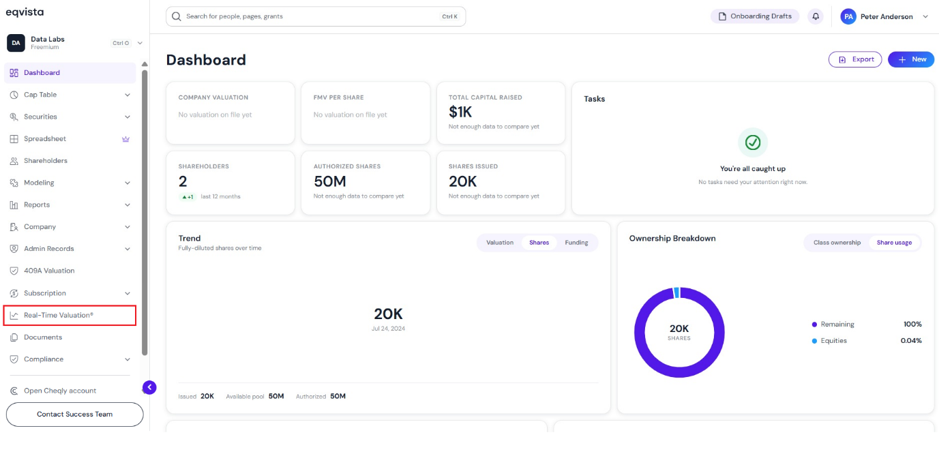
Step 9: Since QuickBooks has been connected to access your financial data and automatically generate quarterly real-time valuations.
The real-time valuation generated by QuickBooks can be viewed by clicking on “Real Time Valuation” on the left side of the dashboard.
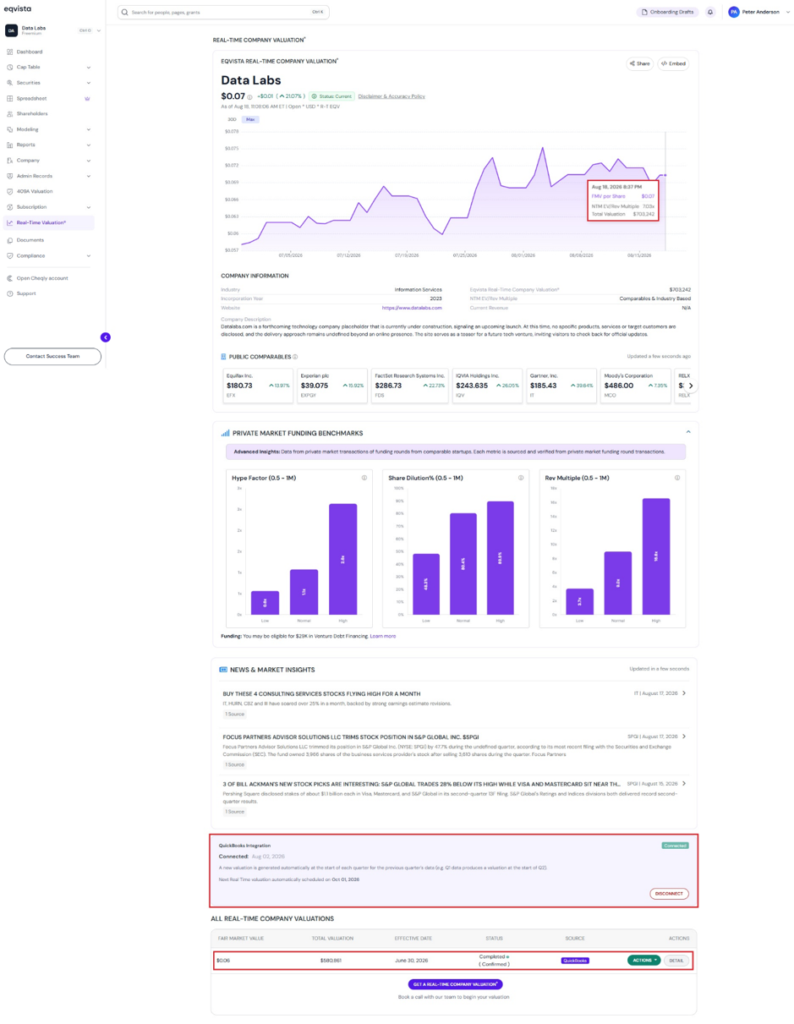
Then, you will be directed to the page displaying the fair market value of real-time valuation and the source as “QuickBooks”.
The QuickBooks integration displays the status “Connected” along with details of the next real time valuation schedule, and an option to “Disconnect”.
Note: On this page, you can view the real-time valuation graph and to embed real-time valuation, click on “Embed”. To share your real-time valuation report, click on “Share”. Check out the respective support articles to learn more about it.
If you want to know more or understand any other process, check out the other support articles here or contact us!